Encouraging Your Team to Complete Weekly Manager Check-ins
 Updated
by
Amy Thomas
Updated
by
Amy Thomas
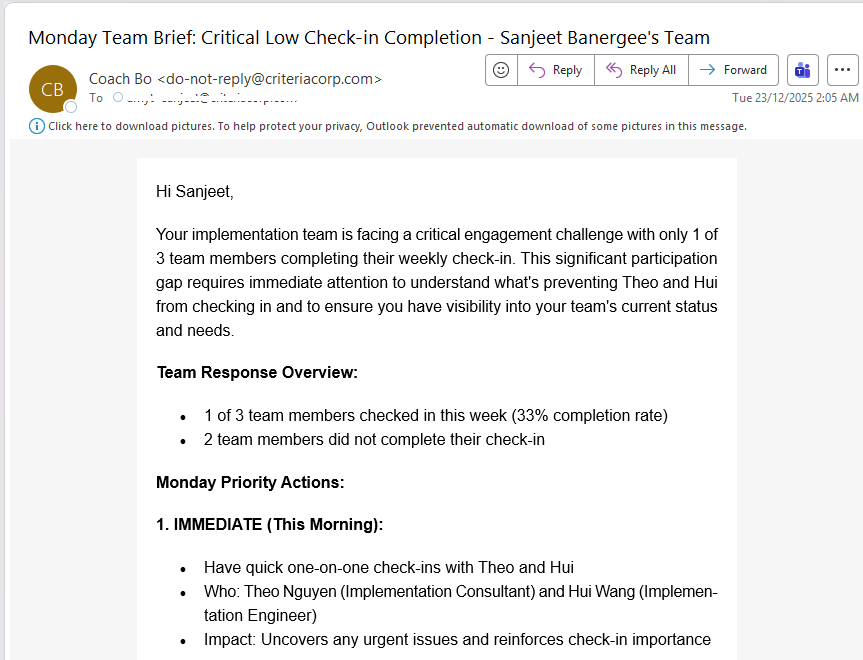
Your organization just introduced Weekly Manager Check-ins, but not everyone on your team is on board yet. Change can take some time, and helping your team understand why weekly feedback matters is key. Here’s how to spark interest, build trust, and turn check-ins into something your team actually looks forward to each week.
Introduction
- Briefly restate what Develop Weekly Manager Check-ins are: a quick, 2–3 minute AI-powered conversation that helps teams stay connected, supported, and aligned.
- Emphasize that regular participation is the key to unlocking meaningful insights and improving team engagement.
- Set the stage: as a people manager, your leadership sets the tone for consistent participation.
1. Set the “Why” First
- Explain why check-ins matter: they help leadership better understand team sentiment, surface blockers early, and celebrate wins faster.
- Tie participation to individual value: “Your feedback shapes how I support you.”
- Share real-world examples: share how you personally use the insights from check-ins to make better decisions and improve their 1:1s.
Mention that the best adoption comes when employees understand the impact of their responses, not just the task of completing them.
2. Lead by Example
- Demonstrate commitment by completing your own manager check-ins consistently.
- Talk about team trends or learning moments during meetings so employees see their feedback being used in real time.
- Model transparency: acknowledge themes from check-ins (e.g., workload, morale) and describe the actions you’re taking.
Result: When managers show that feedback leads to real outcomes, team participation naturally increases.
3. Make It Part of Your Weekly Rhythm
- Integrate check-ins into existing workflows:
- Reference them in weekly stand-ups or 1:1s.
- Mention reminders on Thursdays when they launch and follow up on Mondays when insights arrive.
- Use the check-in data to structure weekly priorities or check-in questions in your team syncs.
Keep momentum by celebrating 100% completion milestones or small acts of progress revealed in check-ins.
4. Recognize and Reinforce Participation
- Publicly thank your team for completing their check-ins. Recognition drives consistency.
- Highlight a positive trend surfaced by the data (e.g., improved collaboration, faster issue resolution).
- Use Coach Bo’s insights as a springboard for meaningful praise and constructive discussions.
5. Create Psychological Safety
- Stress that check-ins aren’t performance evaluations: they’re conversations.
- Encourage honesty, and reassure the team that feedback is used to help, not judge.
- Keep communication human: when employees feel safe to share real challenges, they’re more likely to engage each week.
Conclusion
- Reiterate the power of consistency — small weekly moments lead to big long-term improvements in engagement, trust, and productivity.
- End with a simple manager mantra: “If we make time to listen every week, we’ll never lose touch.”
