Discover Hybrid Scoring: score every video interview question the way it deserves
 Updated
by
Amy Thomas
Updated
by
Amy Thomas

Hybrid Scoring is a powerful new upgrade to our video interviewing tool, giving you the flexibility to mix scoring types within a single interview template. Until now, templates were all-in: either fully AI-scored or fully human-scored. With Hybrid Scoring, you can set scoring question by question, tailoring each one to your hiring goals, question style, and team workflow.
 Human Scoring: questions are evaluated by your team. "Why do you want to work here?"
 Automated Scoring: questions are scored by Criteria's IIQ. "Tell me about the most difficult problem you have needed to solve at work. What was your process in finding a solution?"
 Unscored: questions that do not need to be scored. "What is your salary expectation?"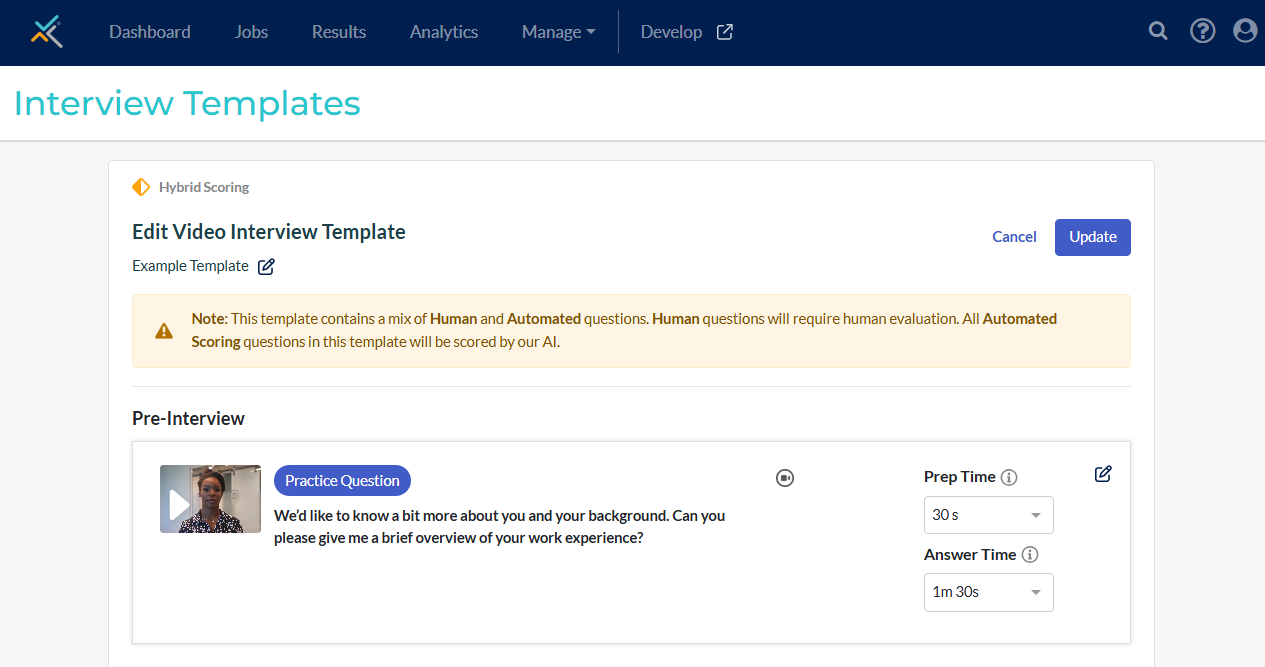
Hybrid Scoring is designed to help you move faster without sacrificing nuance:
1) Get the speed of AI where it fits best. Use Automated Scoring on VIAS-eligible behavioral, situational, or experience-based questions, so you can quickly surface stronger matches and keep your process moving.
2) Keep human judgment where it matters most. Some questions call for context and nuance, like motivation-style prompts. Hybrid Scoring lets you keep those questions human-scored while still benefiting from AI on the rest.
3) Ask the questions you need, without forcing a score. Not every question should impact a candidate’s score. With Unscored questions, you can include prompts like “Tell us about yourself” or “What are your salary expectations?” strictly for added insight.
4) Build more complete, job-relevant interviews. Hybrid Scoring helps you design interviews that feel more natural and aligned to real-world hiring conversations, combining structured evaluation with the right room for human interpretation.

✅ Hybrid templates are automatically identified when they include a mix of scoring types, making it easy to organize and filter templates.
✅ AI scoring starts automatically on Automated questions after candidates complete interviews, while evaluators can review human-scored (and unscored) responses in parallel.
